

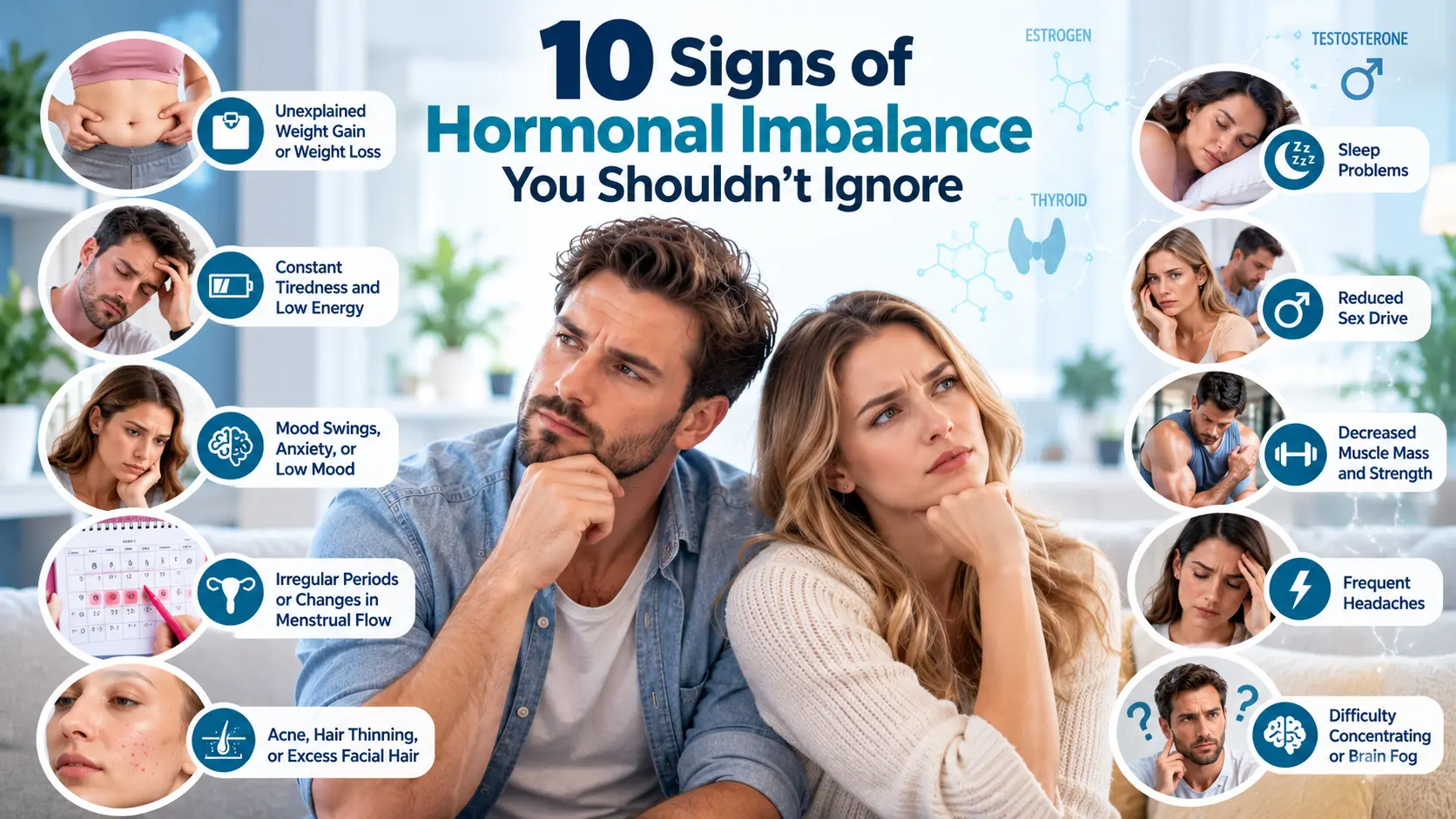
Hormones play an important role in how your body works every day. They help control your energy levels, sleep, mood, metabolism, growth, and reproductive health. When hormone levels become too high or too low, they can affect your physical and emotional well-being.
Hormonal changes can happen at different stages of life, including puberty, pregnancy, perimenopause, and menopause. However, ongoing symptoms may also be linked to thyroid conditions, diabetes, stress, certain medications, or other health problems.
Recognizing the signs of hormonal imbalance early can help you understand when to seek medical advice. Here are 10 common symptoms you should not ignore and what you can do about them.
What Is a Hormonal Imbalance?
A hormonal imbalance occurs when the body produces too much or too little of one or more hormones. Hormones are chemical messengers made by glands such as the thyroid, adrenal glands, ovaries, and testes.
Even small changes in certain hormone levels can affect several body functions. Symptoms vary depending on which hormone is involved, the person’s age, and their overall health.
10 Signs of Hormonal Imbalance You Shouldn’t Ignore
1. Unexplained Weight Gain or Weight Loss
Have you noticed changes in your weight even though your eating habits and activity levels have stayed the same? Hormonal changes may be one possible reason.
Thyroid hormones help regulate metabolism, while insulin plays a key role in controlling blood sugar. Conditions affecting these hormones may contribute to weight changes. However, diet, sleep, stress, and other medical conditions can also affect body weight.
If weight changes happen without a clear reason or continue over time, speak with a healthcare professional.
2. Constant Tiredness and Low Energy
Feeling tired after a busy day is normal. However, ongoing fatigue despite getting enough sleep may need further attention.
An underactive thyroid can cause tiredness, while problems with blood sugar regulation may also affect energy levels. Hormonal changes during menopause can contribute to poor sleep, which may leave you feeling exhausted during the day.
If fatigue affects your daily activities or does not improve with rest, consider getting a medical evaluation.
3. Mood Swings, Anxiety, or Low Mood
Hormones can influence brain activity and emotional well-being. Changes in estrogen, progesterone, and thyroid hormones may contribute to mood changes in some people.
You may notice increased irritability, anxiety, sadness, or difficulty managing stress. Some women experience these symptoms before their periods or during perimenopause and menopause.
Mood changes can have many causes, so they should not automatically be blamed on hormones. Persistent or severe symptoms deserve professional attention. If you ever have thoughts of harming yourself, call or text 988 (Suicide & Crisis Lifeline) or call 911.
4. Irregular Periods or Changes in Menstrual Flow
Irregular menstrual cycles are among the common hormonal imbalance symptoms in females. Periods that frequently arrive early or late, unusually heavy bleeding, missed periods, or significant changes in menstrual flow may indicate an underlying issue.
Possible causes include pregnancy, polycystic ovary syndrome (PCOS), thyroid disorders, stress, significant weight changes, and changes associated with perimenopause. If there is any chance you could be pregnant, a missed period should be checked with a pregnancy test.
If your periods become consistently irregular or bleeding is unusually heavy, consult a healthcare professional. Any vaginal bleeding after menopause should also be checked. Sudden severe pelvic pain, fainting, or very heavy bleeding requires urgent medical attention.
5. Acne, Hair Thinning, or Excess Facial Hair
Hormones called androgens influence oil production and hair growth. When androgen levels or sensitivity change, some people may develop persistent acne, thinning scalp hair, or increased facial and body hair.
Women with PCOS may experience several of these symptoms along with irregular periods. Hair loss can also result from thyroid conditions, nutritional deficiencies, or other causes.
A proper assessment can help identify the reason and guide suitable treatment rather than relying on unverified skin or hair remedies.
6. Sleep Problems
Difficulty falling asleep, waking frequently during the night, or feeling unrefreshed in the morning may sometimes be linked to hormonal changes.
For example, night sweats and hot flashes during perimenopause or menopause can interrupt sleep. Thyroid disorders may also affect sleep patterns and energy levels.
Improving sleep habits can help, but ongoing sleep problems should be evaluated, particularly when they occur with other symptoms.
7. Reduced Sex Drive
A change in sexual desire can affect both men and women. Hormones such as testosterone and estrogen contribute to sexual health, although stress, relationship concerns, medications, and other health conditions also play a role.
Some men with low testosterone may experience reduced libido, fewer spontaneous erections, or lower energy. Women may notice changes in desire or vaginal comfort during menopause. In men, erection problems can also be an early sign of heart disease or diabetes, so they are worth discussing with a healthcare professional.
If the change is persistent or concerning, a healthcare professional can help identify possible causes.
8. Changes in Body Temperature and Excessive Sweating
Feeling unusually hot or cold, experiencing hot flashes, or sweating more than usual may sometimes be related to hormone changes.
Menopause can cause hot flashes and night sweats. An overactive thyroid may cause heat intolerance and increased sweating, while an underactive thyroid may make someone more sensitive to cold.
Because these symptoms have several possible causes, a medical evaluation can help determine whether hormones are involved.
9. Digestive Changes and Bloating
Ongoing bloating, constipation, or changes in bowel habits may occur alongside certain hormonal conditions.
For example, an underactive thyroid can slow digestion and contribute to constipation. Some people also notice changes in bloating around their menstrual cycle.
However, digestive symptoms are not specific signs of hormonal imbalance. Persistent abdominal pain, blood in the stool, unexplained weight loss, or worsening digestive problems should be assessed by a healthcare professional.
10. Difficulty Concentrating or Brain Fog
Do you often struggle to concentrate, remember details, or think clearly? These experiences are sometimes described as brain fog.
Poor sleep, stress, thyroid disorders, and hormonal changes during perimenopause or menopause may contribute to concentration difficulties. Other causes, including anemia, medication effects, and mood disorders, may also be involved.
If brain fog continues, becomes worse, or interferes with your work and daily life, seek medical advice to identify the underlying cause.
What Are the 5 Signs of Hormonal Imbalance?
Five common signs to watch for are:
- Unexplained weight gain or weight loss.
- Persistent fatigue or low energy.
- Mood changes, anxiety, or irritability.
- Irregular periods or changes in menstrual flow.
- Hair thinning, persistent acne, or changes in body hair.
These symptoms do not confirm a hormonal imbalance on their own. Their meaning depends on your medical history, other symptoms, and examination findings.
What Are the 11 Signs That Your Hormones Are Out of Whack?
In addition to the 10 signs discussed above, frequent headaches may sometimes occur alongside hormonal changes, including changes around menstruation.
Other possible symptoms include changes in appetite, muscle weakness, fertility difficulties, and changes in blood sugar. Not everyone experiences the same symptoms, and having several symptoms does not necessarily mean that a hormone problem is responsible.
How to Fix Hormonal Imbalance Quickly
There is no single quick fix for hormonal imbalance. The right approach depends on the hormone involved and the underlying cause.
You can support your general health by:
- Eating balanced meals with vegetables, fruits, whole grains, protein, and healthy fats.
- Getting regular physical activity suited to your ability and health.
- Maintaining a consistent sleep schedule and aiming for sufficient sleep.
- Managing stress through relaxation, exercise, or other healthy activities.
- Avoiding unprescribed hormone products and supplements marketed as quick fixes.
- Scheduling a medical evaluation if symptoms persist or worsen.
These steps may support overall well-being, but they cannot replace treatment for a diagnosed hormonal condition.
How to Treat Hormonal Imbalance in Females
Hormonal imbalance in females is not one single condition, so treatment depends on its cause. PCOS, thyroid disorders, menopause-related symptoms, and other conditions require different approaches.
A healthcare professional may recommend lifestyle changes, medication, or hormone therapy when appropriate. For example, treatment for PCOS may focus on menstrual regularity and metabolic health, while thyroid conditions may require medication to correct hormone levels.
There is no universal cure, and not every woman needs hormone therapy. Avoid self-diagnosis and seek personalized medical advice.
Treatment of Hormonal Imbalance
Treatment begins with identifying the possible cause of the symptoms. Your healthcare professional may review your medical history, menstrual or reproductive health, medications, and family history before deciding whether testing is needed.
Depending on your symptoms, evaluation may include blood tests for thyroid function, blood sugar, or specific reproductive hormones. Not everyone needs every test, and hormone levels must be interpreted in the context of age, symptoms, medications, and sometimes the time of day or menstrual cycle.
Treatment may involve prescribed medication, targeted hormone therapy, management of an underlying condition, or recommended lifestyle changes.
If you are experiencing ongoing symptoms, learn more about hormone health care for men and women in Woodbridge and Springfield, VA.
What Are the Side Effects of Hormonal Imbalance?
The effects depend on which hormones are affected and how long the condition continues. Possible effects include:
- Menstrual irregularities and fertility difficulties.
- Changes in weight, energy, and sleep.
- Reduced sexual desire.
- Mood and concentration changes.
- Changes in bone health with certain long-term hormone deficiencies.
- Problems with blood sugar or cholesterol in some conditions.
These effects do not occur in everyone. Early assessment and appropriate management can help reduce the risk of complications associated with certain hormonal disorders.
Is Hormonal Imbalance Dangerous?
Some hormonal changes are normal and temporary, while others may indicate a medical condition that needs treatment. For example, untreated thyroid disorders or certain hormone deficiencies can lead to health complications over time.
Seek medical advice if symptoms persist, recur, or affect your daily life. Get urgent medical attention for severe symptoms such as chest pain, fainting, confusion, or severe weakness. Sudden severe headache or significant vision changes also require urgent assessment.
Final Thoughts
Hormonal imbalance can affect many aspects of health, from energy and sleep to menstrual cycles, mood, and sexual well-being. The important thing is to recognize ongoing changes rather than ignore them or assume they are caused by stress or aging.
If you notice several symptoms or experience changes that interfere with your daily routine, speak with a qualified healthcare professional. Identifying the underlying cause is the first step toward choosing the right care.
For personalized guidance, visit KAR Medical Care’s hormone health service page to learn more about hormone health services for men and women in Woodbridge and Springfield, Virginia.
Medical disclaimer: This article is for informational purposes only and does not replace professional medical advice, diagnosis, or treatment.